Buy dvmagic.eu ?
We are moving the project
dvmagic.eu .
Are you interested in purchasing the domain
dvmagic.eu ?
domain@kv-gmbh.de · 0541-91531010
Buy dvmagic.eu ?
What is the difference between conditional and conditional?
The question seems to have a typo. It appears to be asking for the difference between "conditional" and "condition." A "conditional" typically refers to something that is dependent on a certain condition or situation, such as an "if-then" statement in programming or a requirement that must be met. On the other hand, a "condition" is the specific circumstance or state that must be satisfied for the conditional to be true or for something to happen. In essence, a condition sets the criteria for a conditional to be applicable or valid. **
What are signal words for Conditional 1 and Conditional 2?
Signal words for Conditional 1 include "if," "when," "unless," and "provided that." These words indicate a possible future condition and its likely result. Signal words for Conditional 2 include "would," "could," "might," and "should." These words suggest a hypothetical or unlikely condition and its potential outcome. **
Similar search terms for Conditional
Top-Angebote
Products related to Conditional:
-
Masque Milano Sleight of Fern EDP U 10 mlMasque Milano Sleight of Fern, 10 ml, Eaux de Parfum unisex, New day – new opportunity to tackle more challenges. Masque Milano Sleight of Fern unisex Eau de Parfum will refresh your mind so that you can boldly follow your instinct. Embrace your everyday adventures! aromatic fragrance with herbal notes fougère fragrance for natural-born leaders with a dynamic personality fresh fragrance, ideal for hot weather unisex – suitable for both women and men129,00 £*Shipping: 3,99 £Secure redirect to the provider
-
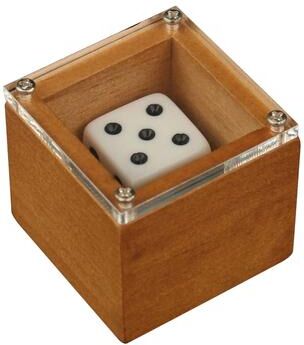
Multisell Products Hub Magic Dice Illusion Prop Number Changing Dice Trick For Kids & Adults Magic Dice Illusion Prop Number Changing Dice Trick For Kids & AdultsUnleash your inner magician with the Magic Dice! This mesmerizing illusion prop allows you to perform an incredible numberchanging dice trick that will amaze audiences of all ages. Perfect for aspiring magicians, this trick is ideal for both kids...34,97 $*Shipping: 0,00 $Secure redirect to the provider
-
DK The Complete Sailing Manual By Steve Sleight, Sir Ben AinslieA new and updated edition of the only sailing manual that you will ever need. Whether you are a seasoned seafarer or just starting out, this fully revised and updated sailing manual is perfect for all levels of experience. Learn how to handle any sailing situation - with thorough coverage of all aspects of sailing and boat ownershipInside the pages of this new edition of the go-to guide about sailing and boat maintenance, you'll discover:- Comprehensive coverage of all aspects of sailing practice written by an expert sailor- The latest information and advice, and technological developments- A complete tuition course on seamanship, chapter by chapter- Authoritative text, clear, annotated diagrams, and action photographs - A reliable, instant, and user-friendly handbook for any sailing situation- Foreword by quadruple Olympic gold medalist, Sir Ben AinslieIn DK's The Complete Sailing Manual, former British national champion Steve Sleight offers a wealth of expert advice and guidance in the form of a complete tuition course on seamanship. This ultimate sailing handbook is packed with engaging essential information and breathtaking action photography. Handy diagrams, and step-by-step artwork, and instructions will teach you all the latest sailing techniques. This updated edition for 2021 features all of the latest developments in sailing - including foiling, long-distance cruising, and high-speed apparent-wind sailing and navigation. Explore new developments in sailing equipment such as modern performance systems, electronic navigation and ways to use alternative energy on board. Explore the latest rules, regulations, and best practices from collision regulations to safety equipment. This essential sailing book is necessary for every keen sailor, from the novice to the seasoned sea person.13,99 £*Shipping: 2,99 £Secure redirect to the provider
-
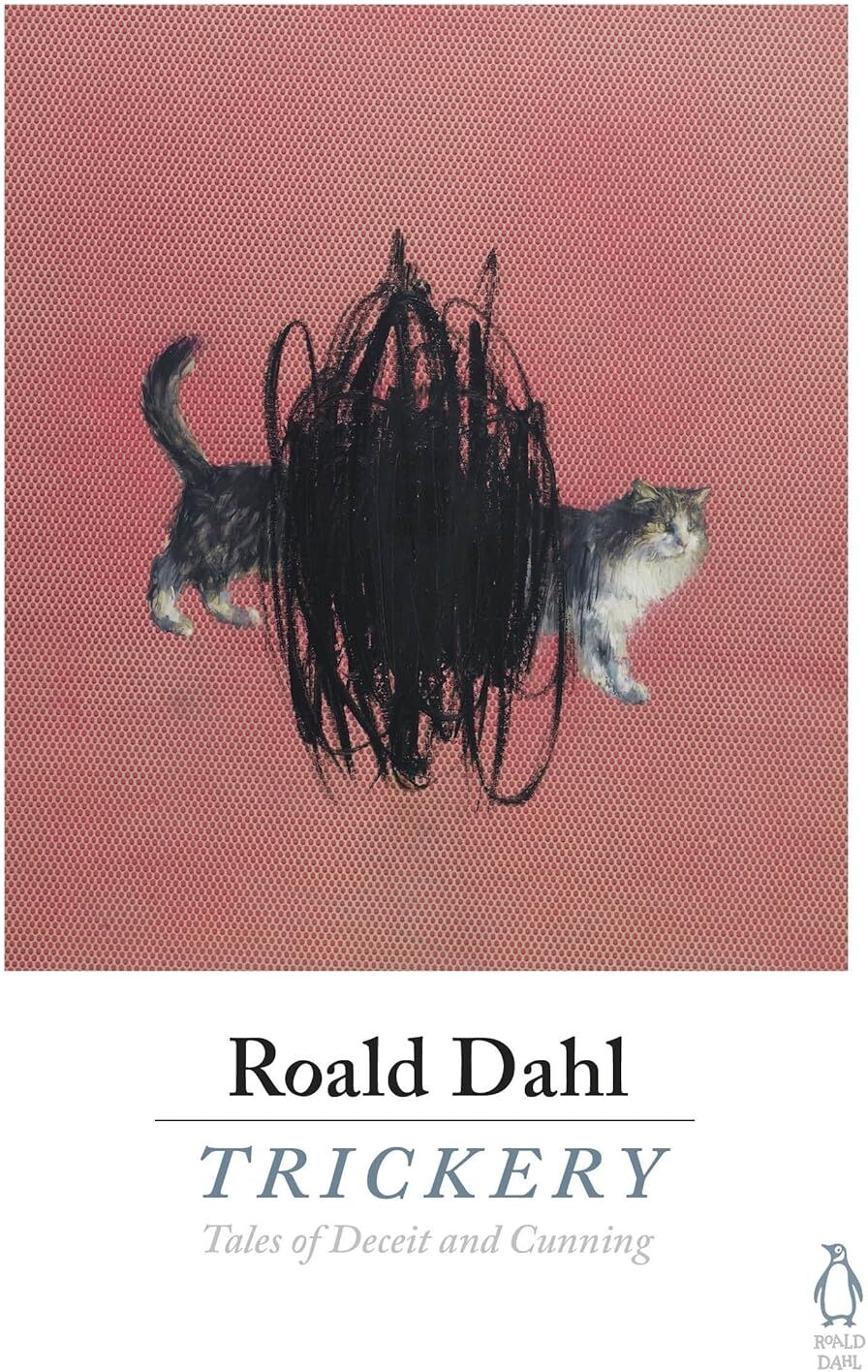
Michael Joseph Roald Dahl 5 Books Collection Set (Deception, Madness, Cruelty, Lust, Trickery)Roald Dahl 5 Books Collection Set (Deception, Madness, Cruelty, Lust, Trickery) Description Deception Why do we lie? Why do we deceive those we love most? What do we fear revealing? In these ten tales of deception master storyteller Roald Dahl explores our tireless efforts to hide the truth about ourselves. Here, among many others, you'll read about how to get away with the perfect murder, the old man whose wagers end in a most disturbing payment, how revenge is sweeter when it is carried out by someone else and the card sharp so good at cheating he does something surprising with his life. Madness Our greatest fear is of losing control - of our lives, but, most of all, of ourselves. In these ten unsettling tales of unexpected madness master storyteller Roald Dahl explores what happens when we let go our sanity. Among other stories, you'll meet the husband with a jealous fixation on the family cat, the landlady who wants her guests to stay forever, the man whose taste for pork leads him astray and the wife with a pathological fear of being late. Cruelty Even when we mean to be kind we can sometimes be cruel. We each have a streak of nastiness inside us. In these ten tales of cruelty master storyteller Roald Dahl explores how and why it is we make others suffer. Among others, you'll read the story of two young bullies and the boy they torment, the adulterous wife who uncovers her husband's secret, the man with a painting tattooed on his back whose value he doesn't appreciate and the butler and chef who run rings around their obnoxious employer. Lust Lust, in all its myriad forms, consumes us. What won't we do to achieve our heart's desire? In these ten tales of twisted love master storyteller Roald Dahl explores how our darkest impulses reveal who we really are. Here you'll read a story concerning wife swapping with a sting in its tail, hear of the aphrodisiac that drives men into a frenzy, discover the last act in a tale of jilted first love and discover the naked truth of art, among others. Trickery How underhand could you be to get what you want? In these ten tales of dark and twisted trickery Roald Dahl reveals that we are at our smartest and most cunning when we set out to deceive others - and, sometimes, even ourselves. Here, among others, you'll read of the married couple and the parting gift which rocks their marriage, the light fingered hitch-hiker and the grateful motorist, and discover why the serious poacher keeps a few sleeping pills in his arsenal.13,99 £*Shipping: 2,99 £Secure redirect to the provider


-
Is the conditional 1 the same as the conditional present?
Yes, the conditional 1 is the same as the conditional present. In English grammar, the conditional 1 is used to talk about hypothetical situations and their possible outcomes in the present or future. It is formed by using the auxiliary verb "would" followed by the base form of the main verb. This is the same structure used for the conditional present tense, making them essentially the same tense with different names. **
-
What is conditional formatting?
Conditional formatting is a feature in spreadsheet applications that allows users to apply formatting rules to cells based on specific conditions. This feature helps users to visually highlight important information, trends, or outliers in their data. For example, users can set up rules to automatically change the color of cells that meet certain criteria, such as values above a certain threshold. Conditional formatting helps to make data analysis easier and more efficient by drawing attention to key insights. **
-
Conditional, subjunctive or indicative?
The choice between conditional, subjunctive, or indicative mood depends on the context of the sentence. The conditional mood is used to express a hypothetical situation or a condition that is dependent on something else happening. The subjunctive mood is used to express wishes, recommendations, or possibilities. The indicative mood is used to state facts or ask questions. **
-
What does the Conditional express?
The Conditional expresses a situation or action that is dependent on another situation or action. It is used to talk about hypothetical or possible events in the future, and it often involves the use of the words "if" or "when." The Conditional helps to convey the idea of cause and effect, and it allows us to discuss potential outcomes based on certain conditions being met. **


How is the conditional formed?
The conditional in English is formed by using the modal verb "would" followed by the base form of the main verb. For example, "I would go" or "She would study." The conditional is used to talk about hypothetical situations, future possibilities, or polite requests. It is important to note that the conditional is often used with an "if" clause to show the condition that must be met for the action to take place. **
How are conditional probabilities calculated?
Conditional probabilities are calculated by dividing the probability of the intersection of two events by the probability of the given condition. This can be expressed as P(A|B) = P(A and B) / P(B), where P(A|B) is the conditional probability of event A given event B has occurred, P(A and B) is the probability of both events A and B occurring, and P(B) is the probability of event B occurring. This formula allows us to calculate the likelihood of one event occurring given that another event has already occurred. **
Top-Angebote
Products related to Conditional:
-
Uplift Picks Magic Dice Trick Changing Number Illusion Dice Magic Prop Magic Dice Trick Changing Number Illusion Dice Magic PropAmaze your friends and audience with this clever magic dice trick that makes numbers change right before their eyes. This fun and easytouse changing dice magic prop is perfect for beginners and seasoned performers alike. Designed for smooth...41,00 $*Shipping: 0,00 $Secure redirect to the provider
-
Discount Dollar Deals Magic Dice Illusion Trick Professional Stage Magic Props For Kids Adults Magic Dice Illusion Trick Professional Stage Magic Props For Kids AdultsUnleash your inner magician with this Magic Dice Illusion Trick an exciting and entertaining way to astonish your audience! Perfect for both kids and adults, this unique magic props set lets you perform mindblowing tricks that will captivate...34,97 $*Shipping: 0,00 $Secure redirect to the provider
-
Masque Milano Sleight of Fern EDP U 10 mlMasque Milano Sleight of Fern, 10 ml, Eaux de Parfum unisex, New day – new opportunity to tackle more challenges. Masque Milano Sleight of Fern unisex Eau de Parfum will refresh your mind so that you can boldly follow your instinct. Embrace your everyday adventures! aromatic fragrance with herbal notes fougère fragrance for natural-born leaders with a dynamic personality fresh fragrance, ideal for hot weather unisex – suitable for both women and men129,00 £*Shipping: 3,99 £Secure redirect to the provider
-
Multisell Products Hub Magic Dice Illusion Prop Number Changing Dice Trick For Kids & Adults Magic Dice Illusion Prop Number Changing Dice Trick For Kids & AdultsUnleash your inner magician with the Magic Dice! This mesmerizing illusion prop allows you to perform an incredible numberchanging dice trick that will amaze audiences of all ages. Perfect for aspiring magicians, this trick is ideal for both kids...34,97 $*Shipping: 0,00 $Secure redirect to the provider
-
What is the difference between conditional and conditional?
The question seems to have a typo. It appears to be asking for the difference between "conditional" and "condition." A "conditional" typically refers to something that is dependent on a certain condition or situation, such as an "if-then" statement in programming or a requirement that must be met. On the other hand, a "condition" is the specific circumstance or state that must be satisfied for the conditional to be true or for something to happen. In essence, a condition sets the criteria for a conditional to be applicable or valid. **
-
What are signal words for Conditional 1 and Conditional 2?
Signal words for Conditional 1 include "if," "when," "unless," and "provided that." These words indicate a possible future condition and its likely result. Signal words for Conditional 2 include "would," "could," "might," and "should." These words suggest a hypothetical or unlikely condition and its potential outcome. **
-
Is the conditional 1 the same as the conditional present?
Yes, the conditional 1 is the same as the conditional present. In English grammar, the conditional 1 is used to talk about hypothetical situations and their possible outcomes in the present or future. It is formed by using the auxiliary verb "would" followed by the base form of the main verb. This is the same structure used for the conditional present tense, making them essentially the same tense with different names. **
-
What is conditional formatting?
Conditional formatting is a feature in spreadsheet applications that allows users to apply formatting rules to cells based on specific conditions. This feature helps users to visually highlight important information, trends, or outliers in their data. For example, users can set up rules to automatically change the color of cells that meet certain criteria, such as values above a certain threshold. Conditional formatting helps to make data analysis easier and more efficient by drawing attention to key insights. **
Similar search terms for Conditional
-
DK The Complete Sailing Manual By Steve Sleight, Sir Ben AinslieA new and updated edition of the only sailing manual that you will ever need. Whether you are a seasoned seafarer or just starting out, this fully revised and updated sailing manual is perfect for all levels of experience. Learn how to handle any sailing situation - with thorough coverage of all aspects of sailing and boat ownershipInside the pages of this new edition of the go-to guide about sailing and boat maintenance, you'll discover:- Comprehensive coverage of all aspects of sailing practice written by an expert sailor- The latest information and advice, and technological developments- A complete tuition course on seamanship, chapter by chapter- Authoritative text, clear, annotated diagrams, and action photographs - A reliable, instant, and user-friendly handbook for any sailing situation- Foreword by quadruple Olympic gold medalist, Sir Ben AinslieIn DK's The Complete Sailing Manual, former British national champion Steve Sleight offers a wealth of expert advice and guidance in the form of a complete tuition course on seamanship. This ultimate sailing handbook is packed with engaging essential information and breathtaking action photography. Handy diagrams, and step-by-step artwork, and instructions will teach you all the latest sailing techniques. This updated edition for 2021 features all of the latest developments in sailing - including foiling, long-distance cruising, and high-speed apparent-wind sailing and navigation. Explore new developments in sailing equipment such as modern performance systems, electronic navigation and ways to use alternative energy on board. Explore the latest rules, regulations, and best practices from collision regulations to safety equipment. This essential sailing book is necessary for every keen sailor, from the novice to the seasoned sea person.13,99 £*Shipping: 2,99 £Secure redirect to the provider
-
Michael Joseph Roald Dahl 5 Books Collection Set (Deception, Madness, Cruelty, Lust, Trickery)Roald Dahl 5 Books Collection Set (Deception, Madness, Cruelty, Lust, Trickery) Description Deception Why do we lie? Why do we deceive those we love most? What do we fear revealing? In these ten tales of deception master storyteller Roald Dahl explores our tireless efforts to hide the truth about ourselves. Here, among many others, you'll read about how to get away with the perfect murder, the old man whose wagers end in a most disturbing payment, how revenge is sweeter when it is carried out by someone else and the card sharp so good at cheating he does something surprising with his life. Madness Our greatest fear is of losing control - of our lives, but, most of all, of ourselves. In these ten unsettling tales of unexpected madness master storyteller Roald Dahl explores what happens when we let go our sanity. Among other stories, you'll meet the husband with a jealous fixation on the family cat, the landlady who wants her guests to stay forever, the man whose taste for pork leads him astray and the wife with a pathological fear of being late. Cruelty Even when we mean to be kind we can sometimes be cruel. We each have a streak of nastiness inside us. In these ten tales of cruelty master storyteller Roald Dahl explores how and why it is we make others suffer. Among others, you'll read the story of two young bullies and the boy they torment, the adulterous wife who uncovers her husband's secret, the man with a painting tattooed on his back whose value he doesn't appreciate and the butler and chef who run rings around their obnoxious employer. Lust Lust, in all its myriad forms, consumes us. What won't we do to achieve our heart's desire? In these ten tales of twisted love master storyteller Roald Dahl explores how our darkest impulses reveal who we really are. Here you'll read a story concerning wife swapping with a sting in its tail, hear of the aphrodisiac that drives men into a frenzy, discover the last act in a tale of jilted first love and discover the naked truth of art, among others. Trickery How underhand could you be to get what you want? In these ten tales of dark and twisted trickery Roald Dahl reveals that we are at our smartest and most cunning when we set out to deceive others - and, sometimes, even ourselves. Here, among others, you'll read of the married couple and the parting gift which rocks their marriage, the light fingered hitch-hiker and the grateful motorist, and discover why the serious poacher keeps a few sleeping pills in his arsenal.13,99 £*Shipping: 2,99 £Secure redirect to the provider
-
Inspired Finds Realistic Fake Tongue Piercing Prank Prop With Steel Needle Illusion For Magic Tricks And Halloween Realistic Fake Tongue Piercing Prank Prop With Steel Needle Illusion For Magic Tricks And HalloweenShock your friends with a harmless illusion using this fake tongue piercing prank prop. Designed to create the convincing appearance of a steel needle passing through the tongue, this magic prank prop is perfect for Halloween parties, magic...36,99 $*Shipping: 0,00 $Secure redirect to the provider
-
Conditional, subjunctive or indicative?
The choice between conditional, subjunctive, or indicative mood depends on the context of the sentence. The conditional mood is used to express a hypothetical situation or a condition that is dependent on something else happening. The subjunctive mood is used to express wishes, recommendations, or possibilities. The indicative mood is used to state facts or ask questions. **
-
What does the Conditional express?
The Conditional expresses a situation or action that is dependent on another situation or action. It is used to talk about hypothetical or possible events in the future, and it often involves the use of the words "if" or "when." The Conditional helps to convey the idea of cause and effect, and it allows us to discuss potential outcomes based on certain conditions being met. **
-
How is the conditional formed?
The conditional in English is formed by using the modal verb "would" followed by the base form of the main verb. For example, "I would go" or "She would study." The conditional is used to talk about hypothetical situations, future possibilities, or polite requests. It is important to note that the conditional is often used with an "if" clause to show the condition that must be met for the action to take place. **
-
How are conditional probabilities calculated?
Conditional probabilities are calculated by dividing the probability of the intersection of two events by the probability of the given condition. This can be expressed as P(A|B) = P(A and B) / P(B), where P(A|B) is the conditional probability of event A given event B has occurred, P(A and B) is the probability of both events A and B occurring, and P(B) is the probability of event B occurring. This formula allows us to calculate the likelihood of one event occurring given that another event has already occurred. **
* All prices are inclusive of VAT and, if applicable, plus shipping costs. The offer information is based on the details provided by the respective shop and is updated through automated processes. Real-time updates do not occur, so deviations can occur in individual cases. ** Note: Parts of this content were created by AI.