Buy dvmagic.eu ?
We are moving the project
dvmagic.eu .
Are you interested in purchasing the domain
dvmagic.eu ?
domain@kv-gmbh.de · 0541-91531010
Buy dvmagic.eu ?
Is Homo neanderthalensis a subspecies of Homo sapiens?
No, Homo neanderthalensis is not a subspecies of Homo sapiens. Neanderthals and modern humans are separate species that evolved from a common ancestor. Neanderthals lived in Europe and Asia, while Homo sapiens originated in Africa. Although there is evidence of interbreeding between the two species, they are distinct and separate branches of the human evolutionary tree. **
Are we more Homo sapiens or Homo deus?
As of now, we are more Homo sapiens, as we are still primarily driven by our biological and evolutionary instincts. However, with the rapid advancements in technology and the potential for genetic engineering, some argue that we are on the path to becoming more like Homo deus, or "god-man," as described by Yuval Noah Harari in his book of the same name. This concept suggests that humans may eventually transcend our current limitations and become more god-like in our abilities and capabilities. Ultimately, the answer to this question may depend on the trajectory of future technological and biological developments. **

Similar search terms for Homo
Top-Angebote
Products related to Homo:
-
Arcturus The Classic Friedrich Nietzsche Collection 5 Books Box Set - Ecce Homo, Beyond Good and Evil, Thus Spake Zarathustra, Human All Too Human and MoreThis handsome five-volume box set brings together the classic works Friedrich Nietzsche, presented with striking contemporary cover designs. One of the most prominent thinkers of the 19th century, Nietzsche was a cultural critic and philosopher whose theories on truth, morality, nihilism and the meaning of existence have had enormous influence on Western philosophy. This box set contains his most prominent works, including: - Human, All Too Human - Thus Spake Zarathustra - Beyond Good and Evil - On the Genealogy of Morals - Ecce Homo These influential essay collections have profoundly shaped modern philosophy and remain as pertinent now as they ever were.16,99 £*Shipping: 2,99 £Secure redirect to the provider
-
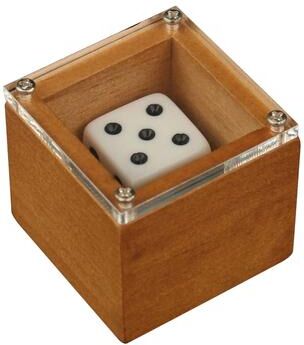
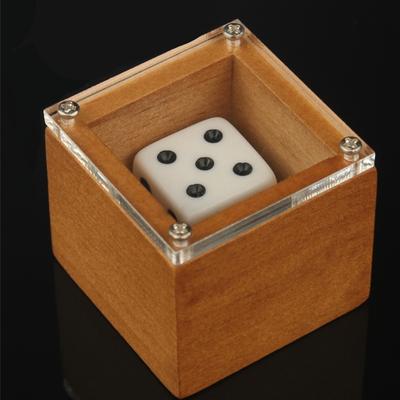
Uplift Picks Magic Dice Trick Changing Number Illusion Dice Magic Prop Magic Dice Trick Changing Number Illusion Dice Magic PropAmaze your friends and audience with this clever magic dice trick that makes numbers change right before their eyes. This fun and easytouse changing dice magic prop is perfect for beginners and seasoned performers alike. Designed for smooth...41,00 $*Shipping: 0,00 $Secure redirect to the provider
-
Discount Dollar Deals Magic Dice Illusion Trick Professional Stage Magic Props For Kids Adults Magic Dice Illusion Trick Professional Stage Magic Props For Kids AdultsUnleash your inner magician with this Magic Dice Illusion Trick an exciting and entertaining way to astonish your audience! Perfect for both kids and adults, this unique magic props set lets you perform mindblowing tricks that will captivate...34,97 $*Shipping: 0,00 $Secure redirect to the provider
-
Multisell Products Hub Magic Dice Illusion Prop Number Changing Dice Trick For Kids & Adults Magic Dice Illusion Prop Number Changing Dice Trick For Kids & AdultsUnleash your inner magician with the Magic Dice! This mesmerizing illusion prop allows you to perform an incredible numberchanging dice trick that will amaze audiences of all ages. Perfect for aspiring magicians, this trick is ideal for both kids...34,97 $*Shipping: 0,00 $Secure redirect to the provider

-
What is the difference between Homo erectus and Homo ergaster?
Homo erectus and Homo ergaster are both extinct species of early humans, but they have some key differences. Homo ergaster is believed to be an ancestor of Homo erectus and is considered to be slightly older, dating back around 1.9 million years ago. Homo ergaster is thought to have a more slender build and longer legs compared to Homo erectus. Additionally, Homo ergaster is believed to have originated in Africa, while Homo erectus is known to have migrated to other parts of the world. **
-
What is the difference between Homo erectus and Homo habilis?
Homo erectus and Homo habilis are both early human species, but there are several key differences between them. Homo habilis, which lived around 2.4 to 1.4 million years ago, was smaller in stature and had a smaller brain size compared to Homo erectus. Homo habilis is also believed to have been more adept at using tools, which is reflected in its name, meaning "handy man." On the other hand, Homo erectus, which lived around 1.9 million to 143,000 years ago, had a larger brain size and was the first human species to migrate out of Africa. Additionally, Homo erectus is believed to have had a more advanced ability to control fire and may have been the first human species to use language. **
-
What is the difference between Homo oecologicus and Homo oeconomicus?
Homo oecologicus and Homo oeconomicus are two different conceptual models used to understand human behavior. Homo oecologicus is a theoretical model that views humans as being inherently connected to and dependent on their natural environment. This model emphasizes the importance of sustainability and the need to consider the ecological impact of human actions. On the other hand, Homo oeconomicus is a model that views humans as rational, self-interested actors who make decisions based on maximizing their own utility or economic gain. This model is often used in economics and assumes that individuals make decisions based on cost-benefit analysis and the pursuit of their own self-interest. In summary, the main difference between the two models is their focus - Homo oecologicus emphasizes the ecological impact of human behavior, while Homo oeconomicus focuses on the economic rationality of human decision-making. **
-
What is the difference between Homo oeconomicus and Homo sapiens?
Homo oeconomicus is a theoretical concept in economics that describes humans as rational, self-interested decision-makers who always act in a way that maximizes their own utility. This model assumes that individuals have perfect information, make decisions based on cost-benefit analysis, and have consistent preferences over time. On the other hand, Homo sapiens refers to actual human beings, who are influenced by emotions, social norms, and cognitive biases in their decision-making. Unlike Homo oeconomicus, Homo sapiens are not always rational and may not always act in their own self-interest. This difference highlights the limitations of the Homo oeconomicus model in capturing the complexity of human behavior. **

What is the difference between Homo sapiens and Homo sapiens sapiens?
Homo sapiens refers to modern humans, while Homo sapiens sapiens specifically refers to anatomically modern humans. The term Homo sapiens sapiens is used to distinguish modern humans from earlier subspecies of Homo sapiens. The addition of "sapiens" in Homo sapiens sapiens emphasizes the advanced cognitive abilities and anatomical features that characterize modern humans. **
What are examples of the Homo oeconomicus and the Homo sociologicus?
The Homo oeconomicus is a theoretical concept in economics that describes a rational, self-interested individual who makes decisions based on maximizing their own utility or economic well-being. An example of Homo oeconomicus might be a person who always seeks to maximize their financial gains, makes decisions based on cost-benefit analysis, and acts in their own self-interest without considering the impact on others. On the other hand, the Homo sociologicus is a theoretical concept in sociology that describes an individual who is influenced by social norms, values, and the expectations of their community. An example of Homo sociologicus might be a person who makes decisions based on the expectations and norms of their social group, prioritizes the well-being of the community over individual gain, and is influenced by social pressures and cultural values in their decision-making. **
Top-Angebote
Products related to Homo:
-
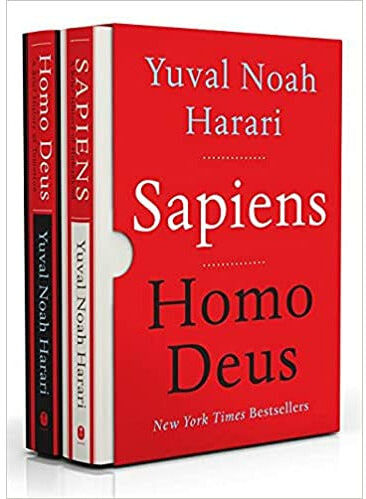
books4people BOX MISSING - Sapiens/Homo Deus Box SetDiscover humanity's past and its future in this in this special box set featuring the bestselling Sapiens--a reading pick of President Barack Obama, Bill Gates, and Mark Zuckerberg--and its acclaimed companion Homo Deus.32,99 £*Shipping: 2,99 £Secure redirect to the provider
-
Penguin Becky Albertalli 4 Books Collection Set (Simon vs. the Homo Sapiens Agenda, Love Simon, Leah on the Offbeat, The Upside of Unrequited)Simon vs. the Homo Sapiens Agenda Straight people should have to come out too. And the more awkward it is, the better. Simon Spier is sixteen and trying to work out who he is - and what he's looking for. But when one of his emails to the very distracting Blue falls into the wrong hands, things get all kinds of complicated. Because, for Simon, falling for Blue is a big deal ... It's a holy freaking huge awesome deal. Love Simon Straight people should have to come out too. And the more awkward it is, the better. Simon Spier is sixteen and trying to work out who he is - and what he's looking for. But when one of his emails to the very distracting Blue falls into the wrong hands, things get all kinds of complicated. Because, for Simon, falling for Blue is a big deal ... It's a holy freaking huge awesome deal. Leah on the Offbeat When it comes to drumming, Leah Burke is usually on beat- but real life isn't always so rhythmic. The only child of a single mum, and her life is less privileged than her friends. Her mum knows she's bisexual, but Leah hasn't mustered the courage to tell her friends. Not even her openly gay BFF, Simon. Prom and college are on the horizon, and tensions are running high. Can Leah still strike the right note, when the people she loves are fighting? And how can she cope knowing that she might love one of her friends more than she ever intended? The Upside of Unrequited I don't entirely understand how anyone gets a boyfriend. Or a girlfriend. It just seems like the most impossible odds. A perfect alignment of feelings and circumstances . . . Molly Peskin-Suso knows all about unrequited love. No matter how many times her twin sister, Cassie, tells her to woman up, Molly is always careful. Better to be careful than be hurt. But when Cassie gets a new girlfriend who comes with a cute hipster-boy sidekick, everything changes. Will is funny, flirtatious and basically the perfect first boyfriend. There's only one problem: Molly's coworker, Reid: the awkward Tolkien superfan she could never fall for . . . right?24,99 £*Shipping: 2,99 £Secure redirect to the provider
-
Arcturus The Classic Friedrich Nietzsche Collection 5 Books Box Set - Ecce Homo, Beyond Good and Evil, Thus Spake Zarathustra, Human All Too Human and MoreThis handsome five-volume box set brings together the classic works Friedrich Nietzsche, presented with striking contemporary cover designs. One of the most prominent thinkers of the 19th century, Nietzsche was a cultural critic and philosopher whose theories on truth, morality, nihilism and the meaning of existence have had enormous influence on Western philosophy. This box set contains his most prominent works, including: - Human, All Too Human - Thus Spake Zarathustra - Beyond Good and Evil - On the Genealogy of Morals - Ecce Homo These influential essay collections have profoundly shaped modern philosophy and remain as pertinent now as they ever were.16,99 £*Shipping: 2,99 £Secure redirect to the provider
-
Uplift Picks Magic Dice Trick Changing Number Illusion Dice Magic Prop Magic Dice Trick Changing Number Illusion Dice Magic PropAmaze your friends and audience with this clever magic dice trick that makes numbers change right before their eyes. This fun and easytouse changing dice magic prop is perfect for beginners and seasoned performers alike. Designed for smooth...41,00 $*Shipping: 0,00 $Secure redirect to the provider
-
Is Homo neanderthalensis a subspecies of Homo sapiens?
No, Homo neanderthalensis is not a subspecies of Homo sapiens. Neanderthals and modern humans are separate species that evolved from a common ancestor. Neanderthals lived in Europe and Asia, while Homo sapiens originated in Africa. Although there is evidence of interbreeding between the two species, they are distinct and separate branches of the human evolutionary tree. **
-
Are we more Homo sapiens or Homo deus?
As of now, we are more Homo sapiens, as we are still primarily driven by our biological and evolutionary instincts. However, with the rapid advancements in technology and the potential for genetic engineering, some argue that we are on the path to becoming more like Homo deus, or "god-man," as described by Yuval Noah Harari in his book of the same name. This concept suggests that humans may eventually transcend our current limitations and become more god-like in our abilities and capabilities. Ultimately, the answer to this question may depend on the trajectory of future technological and biological developments. **
-
What is the difference between Homo erectus and Homo ergaster?
Homo erectus and Homo ergaster are both extinct species of early humans, but they have some key differences. Homo ergaster is believed to be an ancestor of Homo erectus and is considered to be slightly older, dating back around 1.9 million years ago. Homo ergaster is thought to have a more slender build and longer legs compared to Homo erectus. Additionally, Homo ergaster is believed to have originated in Africa, while Homo erectus is known to have migrated to other parts of the world. **
-
What is the difference between Homo erectus and Homo habilis?
Homo erectus and Homo habilis are both early human species, but there are several key differences between them. Homo habilis, which lived around 2.4 to 1.4 million years ago, was smaller in stature and had a smaller brain size compared to Homo erectus. Homo habilis is also believed to have been more adept at using tools, which is reflected in its name, meaning "handy man." On the other hand, Homo erectus, which lived around 1.9 million to 143,000 years ago, had a larger brain size and was the first human species to migrate out of Africa. Additionally, Homo erectus is believed to have had a more advanced ability to control fire and may have been the first human species to use language. **
Similar search terms for Homo
-
Discount Dollar Deals Magic Dice Illusion Trick Professional Stage Magic Props For Kids Adults Magic Dice Illusion Trick Professional Stage Magic Props For Kids AdultsUnleash your inner magician with this Magic Dice Illusion Trick an exciting and entertaining way to astonish your audience! Perfect for both kids and adults, this unique magic props set lets you perform mindblowing tricks that will captivate...34,97 $*Shipping: 0,00 $Secure redirect to the provider
-
Multisell Products Hub Magic Dice Illusion Prop Number Changing Dice Trick For Kids & Adults Magic Dice Illusion Prop Number Changing Dice Trick For Kids & AdultsUnleash your inner magician with the Magic Dice! This mesmerizing illusion prop allows you to perform an incredible numberchanging dice trick that will amaze audiences of all ages. Perfect for aspiring magicians, this trick is ideal for both kids...34,97 $*Shipping: 0,00 $Secure redirect to the provider
-
DK The Complete Sailing Manual By Steve Sleight, Sir Ben AinslieA new and updated edition of the only sailing manual that you will ever need. Whether you are a seasoned seafarer or just starting out, this fully revised and updated sailing manual is perfect for all levels of experience. Learn how to handle any sailing situation - with thorough coverage of all aspects of sailing and boat ownershipInside the pages of this new edition of the go-to guide about sailing and boat maintenance, you'll discover:- Comprehensive coverage of all aspects of sailing practice written by an expert sailor- The latest information and advice, and technological developments- A complete tuition course on seamanship, chapter by chapter- Authoritative text, clear, annotated diagrams, and action photographs - A reliable, instant, and user-friendly handbook for any sailing situation- Foreword by quadruple Olympic gold medalist, Sir Ben AinslieIn DK's The Complete Sailing Manual, former British national champion Steve Sleight offers a wealth of expert advice and guidance in the form of a complete tuition course on seamanship. This ultimate sailing handbook is packed with engaging essential information and breathtaking action photography. Handy diagrams, and step-by-step artwork, and instructions will teach you all the latest sailing techniques. This updated edition for 2021 features all of the latest developments in sailing - including foiling, long-distance cruising, and high-speed apparent-wind sailing and navigation. Explore new developments in sailing equipment such as modern performance systems, electronic navigation and ways to use alternative energy on board. Explore the latest rules, regulations, and best practices from collision regulations to safety equipment. This essential sailing book is necessary for every keen sailor, from the novice to the seasoned sea person.13,99 £*Shipping: 2,99 £Secure redirect to the provider
-
Michael Joseph Roald Dahl 5 Books Collection Set (Deception, Madness, Cruelty, Lust, Trickery)Roald Dahl 5 Books Collection Set (Deception, Madness, Cruelty, Lust, Trickery) Description Deception Why do we lie? Why do we deceive those we love most? What do we fear revealing? In these ten tales of deception master storyteller Roald Dahl explores our tireless efforts to hide the truth about ourselves. Here, among many others, you'll read about how to get away with the perfect murder, the old man whose wagers end in a most disturbing payment, how revenge is sweeter when it is carried out by someone else and the card sharp so good at cheating he does something surprising with his life. Madness Our greatest fear is of losing control - of our lives, but, most of all, of ourselves. In these ten unsettling tales of unexpected madness master storyteller Roald Dahl explores what happens when we let go our sanity. Among other stories, you'll meet the husband with a jealous fixation on the family cat, the landlady who wants her guests to stay forever, the man whose taste for pork leads him astray and the wife with a pathological fear of being late. Cruelty Even when we mean to be kind we can sometimes be cruel. We each have a streak of nastiness inside us. In these ten tales of cruelty master storyteller Roald Dahl explores how and why it is we make others suffer. Among others, you'll read the story of two young bullies and the boy they torment, the adulterous wife who uncovers her husband's secret, the man with a painting tattooed on his back whose value he doesn't appreciate and the butler and chef who run rings around their obnoxious employer. Lust Lust, in all its myriad forms, consumes us. What won't we do to achieve our heart's desire? In these ten tales of twisted love master storyteller Roald Dahl explores how our darkest impulses reveal who we really are. Here you'll read a story concerning wife swapping with a sting in its tail, hear of the aphrodisiac that drives men into a frenzy, discover the last act in a tale of jilted first love and discover the naked truth of art, among others. Trickery How underhand could you be to get what you want? In these ten tales of dark and twisted trickery Roald Dahl reveals that we are at our smartest and most cunning when we set out to deceive others - and, sometimes, even ourselves. Here, among others, you'll read of the married couple and the parting gift which rocks their marriage, the light fingered hitch-hiker and the grateful motorist, and discover why the serious poacher keeps a few sleeping pills in his arsenal.13,99 £*Shipping: 2,99 £Secure redirect to the provider
-
What is the difference between Homo oecologicus and Homo oeconomicus?
Homo oecologicus and Homo oeconomicus are two different conceptual models used to understand human behavior. Homo oecologicus is a theoretical model that views humans as being inherently connected to and dependent on their natural environment. This model emphasizes the importance of sustainability and the need to consider the ecological impact of human actions. On the other hand, Homo oeconomicus is a model that views humans as rational, self-interested actors who make decisions based on maximizing their own utility or economic gain. This model is often used in economics and assumes that individuals make decisions based on cost-benefit analysis and the pursuit of their own self-interest. In summary, the main difference between the two models is their focus - Homo oecologicus emphasizes the ecological impact of human behavior, while Homo oeconomicus focuses on the economic rationality of human decision-making. **
-
What is the difference between Homo oeconomicus and Homo sapiens?
Homo oeconomicus is a theoretical concept in economics that describes humans as rational, self-interested decision-makers who always act in a way that maximizes their own utility. This model assumes that individuals have perfect information, make decisions based on cost-benefit analysis, and have consistent preferences over time. On the other hand, Homo sapiens refers to actual human beings, who are influenced by emotions, social norms, and cognitive biases in their decision-making. Unlike Homo oeconomicus, Homo sapiens are not always rational and may not always act in their own self-interest. This difference highlights the limitations of the Homo oeconomicus model in capturing the complexity of human behavior. **
-
What is the difference between Homo sapiens and Homo sapiens sapiens?
Homo sapiens refers to modern humans, while Homo sapiens sapiens specifically refers to anatomically modern humans. The term Homo sapiens sapiens is used to distinguish modern humans from earlier subspecies of Homo sapiens. The addition of "sapiens" in Homo sapiens sapiens emphasizes the advanced cognitive abilities and anatomical features that characterize modern humans. **
-
What are examples of the Homo oeconomicus and the Homo sociologicus?
The Homo oeconomicus is a theoretical concept in economics that describes a rational, self-interested individual who makes decisions based on maximizing their own utility or economic well-being. An example of Homo oeconomicus might be a person who always seeks to maximize their financial gains, makes decisions based on cost-benefit analysis, and acts in their own self-interest without considering the impact on others. On the other hand, the Homo sociologicus is a theoretical concept in sociology that describes an individual who is influenced by social norms, values, and the expectations of their community. An example of Homo sociologicus might be a person who makes decisions based on the expectations and norms of their social group, prioritizes the well-being of the community over individual gain, and is influenced by social pressures and cultural values in their decision-making. **
* All prices are inclusive of VAT and, if applicable, plus shipping costs. The offer information is based on the details provided by the respective shop and is updated through automated processes. Real-time updates do not occur, so deviations can occur in individual cases. ** Note: Parts of this content were created by AI.