Buy dvmagic.eu ?
We are moving the project
dvmagic.eu .
Are you interested in purchasing the domain
dvmagic.eu ?
domain@kv-gmbh.de · 0541-91531010
Buy dvmagic.eu ?
How to create a titration curve of a conductivity titration?
To create a titration curve of a conductivity titration, you would first need to set up your titration apparatus with a conductivity meter. Begin by measuring the initial conductivity of the solution being titrated. As you add titrant incrementally, record the conductivity at each point. Plot the conductivity values against the volume of titrant added to create a titration curve. The curve will typically show a sharp increase in conductivity at the equivalence point, allowing you to determine the endpoint of the titration. **
How does a titration with the degree of titration work?
A titration with the degree of titration works by gradually adding a titrant of known concentration to a solution of the analyte until the reaction between the two is complete. The point at which the reaction is complete is determined by using an indicator or a pH meter. The amount of titrant required to reach this point is used to calculate the concentration of the analyte in the original solution. The degree of titration refers to the extent to which the reaction has progressed and is typically expressed as a percentage. **
Similar search terms for Titration
Top-Angebote
Products related to Titration:
-
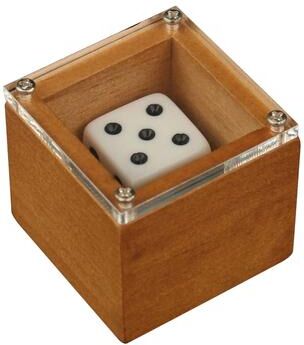
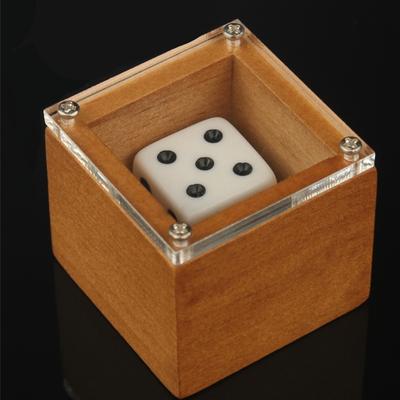
Multisell Products Hub Magic Dice Illusion Prop Number Changing Dice Trick For Kids & Adults Magic Dice Illusion Prop Number Changing Dice Trick For Kids & AdultsUnleash your inner magician with the Magic Dice! This mesmerizing illusion prop allows you to perform an incredible numberchanging dice trick that will amaze audiences of all ages. Perfect for aspiring magicians, this trick is ideal for both kids...34,97 $*Shipping: 0,00 $Secure redirect to the provider
-
DK The Complete Sailing Manual By Steve Sleight, Sir Ben AinslieA new and updated edition of the only sailing manual that you will ever need. Whether you are a seasoned seafarer or just starting out, this fully revised and updated sailing manual is perfect for all levels of experience. Learn how to handle any sailing situation - with thorough coverage of all aspects of sailing and boat ownershipInside the pages of this new edition of the go-to guide about sailing and boat maintenance, you'll discover:- Comprehensive coverage of all aspects of sailing practice written by an expert sailor- The latest information and advice, and technological developments- A complete tuition course on seamanship, chapter by chapter- Authoritative text, clear, annotated diagrams, and action photographs - A reliable, instant, and user-friendly handbook for any sailing situation- Foreword by quadruple Olympic gold medalist, Sir Ben AinslieIn DK's The Complete Sailing Manual, former British national champion Steve Sleight offers a wealth of expert advice and guidance in the form of a complete tuition course on seamanship. This ultimate sailing handbook is packed with engaging essential information and breathtaking action photography. Handy diagrams, and step-by-step artwork, and instructions will teach you all the latest sailing techniques. This updated edition for 2021 features all of the latest developments in sailing - including foiling, long-distance cruising, and high-speed apparent-wind sailing and navigation. Explore new developments in sailing equipment such as modern performance systems, electronic navigation and ways to use alternative energy on board. Explore the latest rules, regulations, and best practices from collision regulations to safety equipment. This essential sailing book is necessary for every keen sailor, from the novice to the seasoned sea person.13,99 £*Shipping: 2,99 £Secure redirect to the provider
-
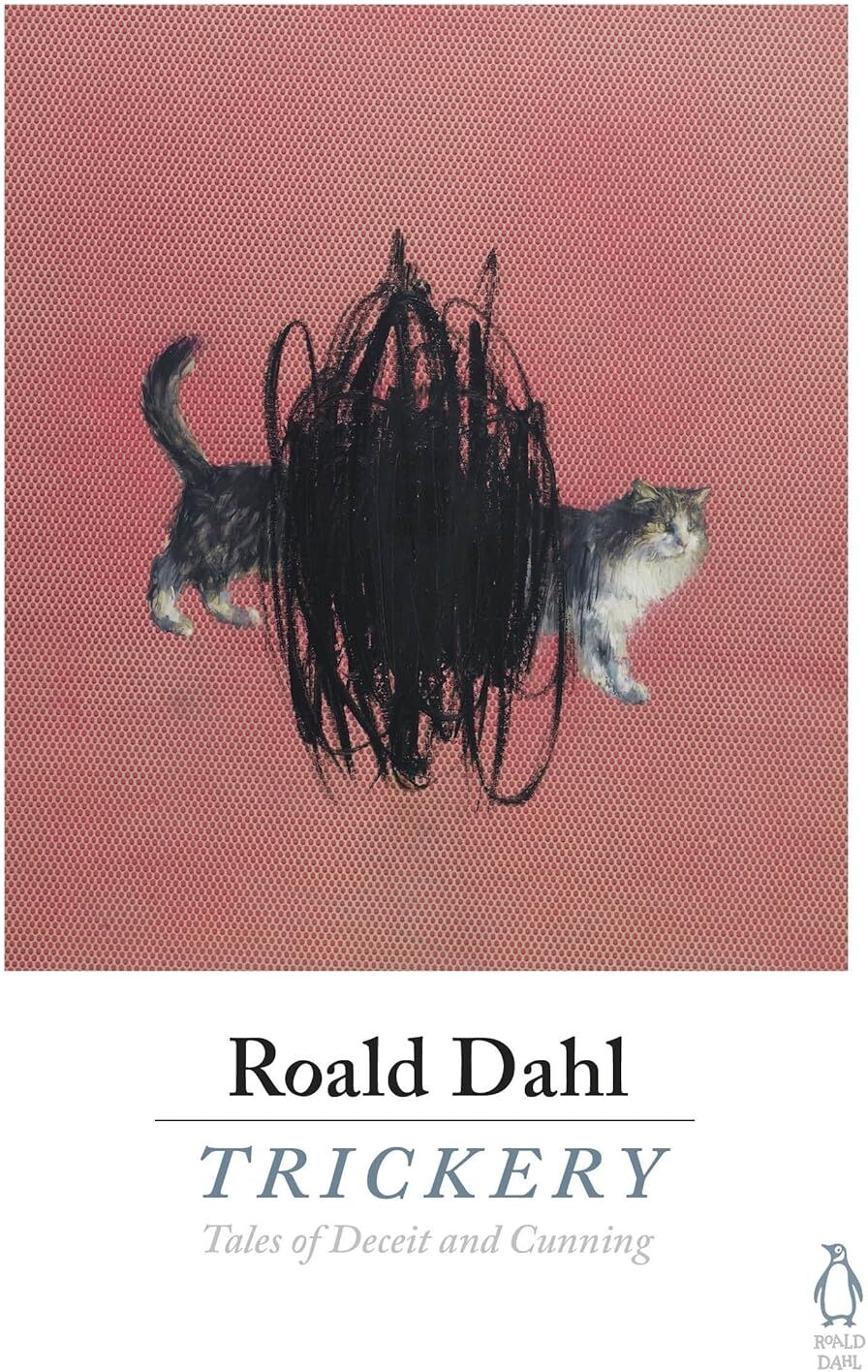
Michael Joseph Roald Dahl 5 Books Collection Set (Deception, Madness, Cruelty, Lust, Trickery)Roald Dahl 5 Books Collection Set (Deception, Madness, Cruelty, Lust, Trickery) Description Deception Why do we lie? Why do we deceive those we love most? What do we fear revealing? In these ten tales of deception master storyteller Roald Dahl explores our tireless efforts to hide the truth about ourselves. Here, among many others, you'll read about how to get away with the perfect murder, the old man whose wagers end in a most disturbing payment, how revenge is sweeter when it is carried out by someone else and the card sharp so good at cheating he does something surprising with his life. Madness Our greatest fear is of losing control - of our lives, but, most of all, of ourselves. In these ten unsettling tales of unexpected madness master storyteller Roald Dahl explores what happens when we let go our sanity. Among other stories, you'll meet the husband with a jealous fixation on the family cat, the landlady who wants her guests to stay forever, the man whose taste for pork leads him astray and the wife with a pathological fear of being late. Cruelty Even when we mean to be kind we can sometimes be cruel. We each have a streak of nastiness inside us. In these ten tales of cruelty master storyteller Roald Dahl explores how and why it is we make others suffer. Among others, you'll read the story of two young bullies and the boy they torment, the adulterous wife who uncovers her husband's secret, the man with a painting tattooed on his back whose value he doesn't appreciate and the butler and chef who run rings around their obnoxious employer. Lust Lust, in all its myriad forms, consumes us. What won't we do to achieve our heart's desire? In these ten tales of twisted love master storyteller Roald Dahl explores how our darkest impulses reveal who we really are. Here you'll read a story concerning wife swapping with a sting in its tail, hear of the aphrodisiac that drives men into a frenzy, discover the last act in a tale of jilted first love and discover the naked truth of art, among others. Trickery How underhand could you be to get what you want? In these ten tales of dark and twisted trickery Roald Dahl reveals that we are at our smartest and most cunning when we set out to deceive others - and, sometimes, even ourselves. Here, among others, you'll read of the married couple and the parting gift which rocks their marriage, the light fingered hitch-hiker and the grateful motorist, and discover why the serious poacher keeps a few sleeping pills in his arsenal.13,99 £*Shipping: 2,99 £Secure redirect to the provider
-
Inspired Finds Realistic Fake Tongue Piercing Prank Prop With Steel Needle Illusion For Magic Tricks And Halloween Realistic Fake Tongue Piercing Prank Prop With Steel Needle Illusion For Magic Tricks And HalloweenShock your friends with a harmless illusion using this fake tongue piercing prank prop. Designed to create the convincing appearance of a steel needle passing through the tongue, this magic prank prop is perfect for Halloween parties, magic...36,99 $*Shipping: 0,00 $Secure redirect to the provider


-
How does titration work?
Titration is a technique used in chemistry to determine the concentration of a specific substance in a solution. It involves slowly adding a solution of known concentration (titrant) to a solution of unknown concentration until the reaction between the two is complete. This is typically indicated by a color change or other observable change. By measuring the volume of titrant required to reach the endpoint, the concentration of the unknown solution can be calculated using stoichiometry. **
-
What is a titration?
A titration is a laboratory technique used to determine the concentration of a specific substance in a solution. It involves slowly adding a solution of known concentration (titrant) to a solution of unknown concentration until the reaction between the two is complete. The point at which the reaction is complete is called the equivalence point, which is used to calculate the concentration of the unknown solution. Titration is commonly used in chemistry for various purposes, such as determining the acidity or alkalinity of a solution. **
-
Can the titration volume be calculated without having performed the titration beforehand?
No, the titration volume cannot be accurately calculated without having performed the titration beforehand. The titration volume is determined by the amount of titrant needed to reach the equivalence point, which can only be determined through the actual titration process. The titration volume is a crucial parameter in determining the concentration of the analyte in the sample, so it is essential to perform the titration to obtain this information accurately. **
-
What does a titration curve look like when no titration is performed?
When no titration is performed, a titration curve would simply be a straight horizontal line at the initial pH of the solution being tested. This is because there would be no addition of titrant to cause any changes in pH. The curve would remain flat and unchanging until a titrant is added to initiate the titration process. **


What is the difference between a pH-metric titration and an indicator titration?
A pH-metric titration involves the use of a pH meter to measure the pH of a solution as a titrant is added to it. This allows for a precise determination of the equivalence point of the titration. On the other hand, an indicator titration uses a chemical indicator that changes color at or near the equivalence point to signal the end of the titration. While pH-metric titrations provide more accurate and precise results, indicator titrations are simpler and more commonly used in introductory chemistry labs. **
What is a back titration?
A back titration is a technique used in analytical chemistry to determine the concentration of an analyte that reacts slowly or incompletely with a direct titration method. It involves adding an excess of a known reagent to the analyte, allowing the reaction to proceed, and then titrating the excess reagent that did not react with a second titrant. By measuring the amount of the second titrant required to react with the excess reagent, the concentration of the analyte can be calculated. Back titrations are particularly useful when the analyte is volatile, weakly acidic or basic, or when there are interfering substances present. **
Top-Angebote
Products related to Titration:
-
Uplift Picks Magic Dice Trick Changing Number Illusion Dice Magic Prop Magic Dice Trick Changing Number Illusion Dice Magic PropAmaze your friends and audience with this clever magic dice trick that makes numbers change right before their eyes. This fun and easytouse changing dice magic prop is perfect for beginners and seasoned performers alike. Designed for smooth...41,00 $*Shipping: 0,00 $Secure redirect to the provider
-
Discount Dollar Deals Magic Dice Illusion Trick Professional Stage Magic Props For Kids Adults Magic Dice Illusion Trick Professional Stage Magic Props For Kids AdultsUnleash your inner magician with this Magic Dice Illusion Trick an exciting and entertaining way to astonish your audience! Perfect for both kids and adults, this unique magic props set lets you perform mindblowing tricks that will captivate...34,97 $*Shipping: 0,00 $Secure redirect to the provider
-
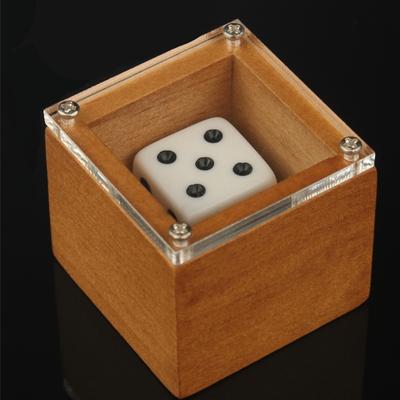
Multisell Products Hub Magic Dice Illusion Prop Number Changing Dice Trick For Kids & Adults Magic Dice Illusion Prop Number Changing Dice Trick For Kids & AdultsUnleash your inner magician with the Magic Dice! This mesmerizing illusion prop allows you to perform an incredible numberchanging dice trick that will amaze audiences of all ages. Perfect for aspiring magicians, this trick is ideal for both kids...34,97 $*Shipping: 0,00 $Secure redirect to the provider
-
DK The Complete Sailing Manual By Steve Sleight, Sir Ben AinslieA new and updated edition of the only sailing manual that you will ever need. Whether you are a seasoned seafarer or just starting out, this fully revised and updated sailing manual is perfect for all levels of experience. Learn how to handle any sailing situation - with thorough coverage of all aspects of sailing and boat ownershipInside the pages of this new edition of the go-to guide about sailing and boat maintenance, you'll discover:- Comprehensive coverage of all aspects of sailing practice written by an expert sailor- The latest information and advice, and technological developments- A complete tuition course on seamanship, chapter by chapter- Authoritative text, clear, annotated diagrams, and action photographs - A reliable, instant, and user-friendly handbook for any sailing situation- Foreword by quadruple Olympic gold medalist, Sir Ben AinslieIn DK's The Complete Sailing Manual, former British national champion Steve Sleight offers a wealth of expert advice and guidance in the form of a complete tuition course on seamanship. This ultimate sailing handbook is packed with engaging essential information and breathtaking action photography. Handy diagrams, and step-by-step artwork, and instructions will teach you all the latest sailing techniques. This updated edition for 2021 features all of the latest developments in sailing - including foiling, long-distance cruising, and high-speed apparent-wind sailing and navigation. Explore new developments in sailing equipment such as modern performance systems, electronic navigation and ways to use alternative energy on board. Explore the latest rules, regulations, and best practices from collision regulations to safety equipment. This essential sailing book is necessary for every keen sailor, from the novice to the seasoned sea person.13,99 £*Shipping: 2,99 £Secure redirect to the provider
-
How to create a titration curve of a conductivity titration?
To create a titration curve of a conductivity titration, you would first need to set up your titration apparatus with a conductivity meter. Begin by measuring the initial conductivity of the solution being titrated. As you add titrant incrementally, record the conductivity at each point. Plot the conductivity values against the volume of titrant added to create a titration curve. The curve will typically show a sharp increase in conductivity at the equivalence point, allowing you to determine the endpoint of the titration. **
-
How does a titration with the degree of titration work?
A titration with the degree of titration works by gradually adding a titrant of known concentration to a solution of the analyte until the reaction between the two is complete. The point at which the reaction is complete is determined by using an indicator or a pH meter. The amount of titrant required to reach this point is used to calculate the concentration of the analyte in the original solution. The degree of titration refers to the extent to which the reaction has progressed and is typically expressed as a percentage. **
-
How does titration work?
Titration is a technique used in chemistry to determine the concentration of a specific substance in a solution. It involves slowly adding a solution of known concentration (titrant) to a solution of unknown concentration until the reaction between the two is complete. This is typically indicated by a color change or other observable change. By measuring the volume of titrant required to reach the endpoint, the concentration of the unknown solution can be calculated using stoichiometry. **
-
What is a titration?
A titration is a laboratory technique used to determine the concentration of a specific substance in a solution. It involves slowly adding a solution of known concentration (titrant) to a solution of unknown concentration until the reaction between the two is complete. The point at which the reaction is complete is called the equivalence point, which is used to calculate the concentration of the unknown solution. Titration is commonly used in chemistry for various purposes, such as determining the acidity or alkalinity of a solution. **
Similar search terms for Titration
-
Michael Joseph Roald Dahl 5 Books Collection Set (Deception, Madness, Cruelty, Lust, Trickery)Roald Dahl 5 Books Collection Set (Deception, Madness, Cruelty, Lust, Trickery) Description Deception Why do we lie? Why do we deceive those we love most? What do we fear revealing? In these ten tales of deception master storyteller Roald Dahl explores our tireless efforts to hide the truth about ourselves. Here, among many others, you'll read about how to get away with the perfect murder, the old man whose wagers end in a most disturbing payment, how revenge is sweeter when it is carried out by someone else and the card sharp so good at cheating he does something surprising with his life. Madness Our greatest fear is of losing control - of our lives, but, most of all, of ourselves. In these ten unsettling tales of unexpected madness master storyteller Roald Dahl explores what happens when we let go our sanity. Among other stories, you'll meet the husband with a jealous fixation on the family cat, the landlady who wants her guests to stay forever, the man whose taste for pork leads him astray and the wife with a pathological fear of being late. Cruelty Even when we mean to be kind we can sometimes be cruel. We each have a streak of nastiness inside us. In these ten tales of cruelty master storyteller Roald Dahl explores how and why it is we make others suffer. Among others, you'll read the story of two young bullies and the boy they torment, the adulterous wife who uncovers her husband's secret, the man with a painting tattooed on his back whose value he doesn't appreciate and the butler and chef who run rings around their obnoxious employer. Lust Lust, in all its myriad forms, consumes us. What won't we do to achieve our heart's desire? In these ten tales of twisted love master storyteller Roald Dahl explores how our darkest impulses reveal who we really are. Here you'll read a story concerning wife swapping with a sting in its tail, hear of the aphrodisiac that drives men into a frenzy, discover the last act in a tale of jilted first love and discover the naked truth of art, among others. Trickery How underhand could you be to get what you want? In these ten tales of dark and twisted trickery Roald Dahl reveals that we are at our smartest and most cunning when we set out to deceive others - and, sometimes, even ourselves. Here, among others, you'll read of the married couple and the parting gift which rocks their marriage, the light fingered hitch-hiker and the grateful motorist, and discover why the serious poacher keeps a few sleeping pills in his arsenal.13,99 £*Shipping: 2,99 £Secure redirect to the provider
-
Inspired Finds Realistic Fake Tongue Piercing Prank Prop With Steel Needle Illusion For Magic Tricks And Halloween Realistic Fake Tongue Piercing Prank Prop With Steel Needle Illusion For Magic Tricks And HalloweenShock your friends with a harmless illusion using this fake tongue piercing prank prop. Designed to create the convincing appearance of a steel needle passing through the tongue, this magic prank prop is perfect for Halloween parties, magic...36,99 $*Shipping: 0,00 $Secure redirect to the provider
-
Inspire Picks Flame To Rose Magic Torch Professional Torch To Flower Illusion Prop blueCreate a breathtaking moment of wonder with this stunning flame to rose magic trick that instantly transforms fire into a beautiful flower. Designed for magicians, performers, and entertainers, this dramatic illusion starts with a real flaming torch...34,93 $*Shipping: 0,00 $Secure redirect to the provider
-
Can the titration volume be calculated without having performed the titration beforehand?
No, the titration volume cannot be accurately calculated without having performed the titration beforehand. The titration volume is determined by the amount of titrant needed to reach the equivalence point, which can only be determined through the actual titration process. The titration volume is a crucial parameter in determining the concentration of the analyte in the sample, so it is essential to perform the titration to obtain this information accurately. **
-
What does a titration curve look like when no titration is performed?
When no titration is performed, a titration curve would simply be a straight horizontal line at the initial pH of the solution being tested. This is because there would be no addition of titrant to cause any changes in pH. The curve would remain flat and unchanging until a titrant is added to initiate the titration process. **
-
What is the difference between a pH-metric titration and an indicator titration?
A pH-metric titration involves the use of a pH meter to measure the pH of a solution as a titrant is added to it. This allows for a precise determination of the equivalence point of the titration. On the other hand, an indicator titration uses a chemical indicator that changes color at or near the equivalence point to signal the end of the titration. While pH-metric titrations provide more accurate and precise results, indicator titrations are simpler and more commonly used in introductory chemistry labs. **
-
What is a back titration?
A back titration is a technique used in analytical chemistry to determine the concentration of an analyte that reacts slowly or incompletely with a direct titration method. It involves adding an excess of a known reagent to the analyte, allowing the reaction to proceed, and then titrating the excess reagent that did not react with a second titrant. By measuring the amount of the second titrant required to react with the excess reagent, the concentration of the analyte can be calculated. Back titrations are particularly useful when the analyte is volatile, weakly acidic or basic, or when there are interfering substances present. **
* All prices are inclusive of VAT and, if applicable, plus shipping costs. The offer information is based on the details provided by the respective shop and is updated through automated processes. Real-time updates do not occur, so deviations can occur in individual cases. ** Note: Parts of this content were created by AI.